

I’ve walked into more than one post-incident review where the root cause boiled down to something almost embarrassingly simple — a default setting nobody changed, an admin account that never got its access trimmed, a backup file sitting on a share drive with no encryption on it. Data is currency, and I don’t say that as a throwaway line. I’ve seen what a breach does to an organization’s trust, its regulatory standing, and its budget, all at once. Databases sit at the center of the target list precisely because that’s where everything worth stealing lives in one place.
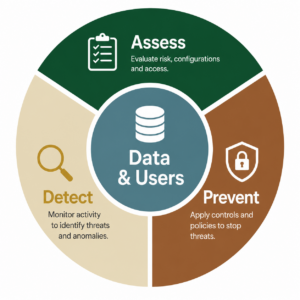
Oracle’s answer to this isn’t a product you switch on. It’s Maximum Security Architecture — a way of thinking about protection as something layered and continuous, baked into how the database runs day to day rather than tacked on after the fact..


Why This Doesn’t Get the Attention It Should
Here’s an uncomfortable pattern I’ve watched repeat itself across banking, telecom, and government environments alike: security gets treated as a reaction, not a discipline. Teams patch after something breaks. They audit because a compliance deadline forces the issue. They encrypt because a policy finally caught up with them.
Attackers don’t work that way. They’re patient and systematic, and they’re not necessarily coming after the database directly — they’re probing the people and systems around it for the softest entry point.
One reused admin password. One CVE that sat unpatched for a quarter longer than it should have. One backup that landed on an unencrypted NAS because nobody thought to check. Any single one of these is enough to hand an attacker the keys.
The question Oracle’s framework forces you to sit with is harder than “are we compliant?” It’s: what happens to this data if every other control has already failed?
Get the Baseline Right First
Before anyone talks about advanced controls, I always go back to basics — is the configuration itself sound? Default settings that never got touched are still one of the most common findings I run into during assessments, and it’s rarely because a DBA was careless. It’s because nobody circled back.
CIS benchmarks and DISA STIGs are useful here, and not because they’re academic checklists. They’re built off real exploitation patterns, so they tell you what actually gets hit in the wild. Oracle layers its own guidance on top of that, covering the database-specific gaps that generic frameworks tend to miss.
What I’ve learned the hard way is that consistency matters more than any single hardening pass. Configurations drift. Patch cycles slip. A new schema gets added under deadline pressure and skips the review the rest of the environment went through. Regular assessments are what catch that drift before someone else does.
You Can’t Protect What You Haven’t Mapped
Two Oracle tools have earned a permanent spot in my toolkit for this.
DBSAT — the Database Security Assessment Tool — runs on-prem and produces a report covering configuration weaknesses, privilege sprawl, password policy gaps, and where sensitive data is actually sitting. It’s free through Oracle support, and I still remember the first time I ran it against a production environment early in my career — the findings were not what anyone in the room expected.
Oracle Data Safe does the same job for cloud databases, but goes further — configuration assessment, sensitive data discovery, user risk scoring, and activity monitoring, all in one place. If you’re running on OCI, it’s typically included at no extra cost, which makes it one of the rare “easy wins” in this whole space.
Where the Real Exposure Lives
Most of the breaches I’ve reviewed didn’t come from a direct assault on the database engine. They came in through the edges.
Compromised admin accounts are the scenario that keeps me up at night, honestly, because admins are trusted by design. Once someone gets those credentials — phishing, credential stuffing, lateral movement, doesn’t matter which — they often walk straight past controls built for everyone else.
Regular user accounts are actually the more common entry point in my experience. Even limited read access to a handful of tables can be enough to pull sensitive records or use as a foothold for something bigger.
Applications are their own problem. A web app talking to the database can leak far more than intended when SQL injection hasn’t been addressed, or when a verbose error message accidentally hands over schema details.
Then there’s the network layer — traffic crossing internal segments unencrypted — and the one I see overlooked constantly: non-production environments. Dev and test copies of production data almost never get the same security treatment as the real thing, and attackers know that asymmetry exists.
Encryption Is Your Last Line, Not Your First
Encryption earns its keep when everything else has already broken down. If someone walks off with a backup file or pulls data straight off a storage array, encryption decides whether they got anything they can actually use.
Transparent Data Encryption (TDE) covers data at rest — database files, exports, backups — and does it transparently enough to applications that I honestly can’t think of a good reason not to enable it. The harder conversation is always key management: where the keys live, how they’re backed up, who can touch them. I’ve seen environments where the keys sat right next to the encrypted data, which defeats the entire point.
For data in motion, Oracle gives you Native Network Encryption and TLS, both of which matter more the blurrier your network boundaries get — and in cloud and hybrid setups, those boundaries are almost never clean.
Passwords Alone Won’t Cut It Anymore
I don’t think anyone in this field still believes passwords are a strong control. They get reused, phished, brute-forced, shared over Slack when someone’s in a hurry. For privileged database access especially, it’s worth the operational friction to move past them.
Oracle supports Kerberos for shops already running Active Directory, PKI certificate-based authentication to replace passwords with a cryptographic identity, and MFA as a second layer that survives most credential theft attempts on its own. None of this rolls out overnight — but once you’ve seen what a compromised DBA credential can actually do in an environment, the extra setup stops feeling optional.
Privilege Creep Is the Quiet Killer
If I had to name the single most underestimated risk across the Oracle environments I’ve worked in, it’s privilege sprawl. Someone gets a grant for a one-off task and it never gets revoked. A role expands to cover an edge case and stays expanded. Multiply that over a few years and you get an access map that would genuinely surprise most DBAs if they actually charted it out.
Oracle Privilege Analysis is the tool that turns this from guesswork into something defensible — it tracks actual privilege usage over time and shows you the gap between what an account has and what it’s actually using. Pair that with regular reviews of roles and object grants, and you steadily shrink the attack surface without breaking anything in production.
For anyone managing more than a handful of databases, Enterprise User Security and Centrally Managed Users (18c onward) tie into LDAP and Active Directory respectively. Centralizing identity is what saves you from the scenario where someone leaves the company and it takes three weeks to find and disable every account they had scattered across different systems.
Prevention Fails Eventually — Auditing Is What Catches It
I’ve never trusted the assumption that preventive controls hold forever. Organizations that lean on that assumption tend to find out about breaches late, sometimes months after the fact, and by then the investigation is a lot messier than it needed to be.
Oracle’s unified auditing framework tracks what actually matters — logins, failed authentication attempts, privilege grants, schema changes, new stored procedures, database link activity. These events don’t happen constantly in a well-run environment, so the audit trail stays usable instead of turning into noise.
The value here isn’t just satisfying an auditor, though that’s part of it. It’s being able to reconstruct exactly what happened, in what order, and who did it — which is the difference between an incident that gets contained in a day and one that drags on for weeks.
It’s a Discipline, Not a Checklist
Maximum Security Architecture isn’t something you buy or configure once and walk away from. Assessment, encryption, authentication, privilege management, auditing, monitoring — they all lean on each other, and a weak point in any one of them becomes extra work for the rest.
Attackers only need one opening. What separates the organizations that weather an incident from the ones that end up as a case study is how many of those openings got closed ahead of time, and how quickly the ones that slipped through get caught.
Security in an Oracle environment isn’t a project with an end date. It’s ongoing operational discipline — and in my experience, the teams that treat it that way are the ones you never hear about in the news.