

Introduction
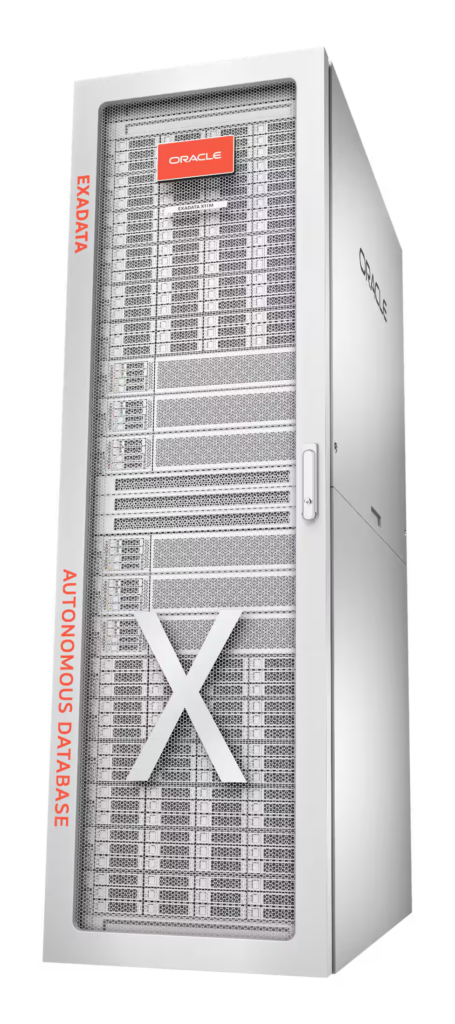
Oracle has officially introduced Oracle Exadata X11M, the latest generation of its industry-leading database platform. Designed to power AI, analytics, and mission-critical OLTP workloads, Exadata X11M continues Oracle’s legacy of delivering extreme performance, scalability, and reliability for enterprise databases.
Exadata is trusted by thousands of organizations worldwide, including many of the largest financial institutions, telecommunications providers, and retail companies. These organizations rely on Exadata to run their most demanding Oracle Database workloads.


What makes Exadata X11M even more exciting is that it provides higher performance and efficiency at the same price as the previous generation (X10M). This means businesses can run more workloads, process more data, and support more users without increasing infrastructure costs.
Even better, Exadata X11M is available everywhere customers need it:
- On-premises with Exadata Database Machine
- In Oracle Cloud Infrastructure (OCI)
- As Exadata Cloud@Customer
- In multicloud environments including AWS, Microsoft Azure, and Google Cloud
This flexibility allows organizations to develop applications anywhere and deploy them everywhere while maintaining full compatibility with Oracle Database.
AI-Accelerated Performance with Exadata X11M
One of the biggest innovations in Exadata X11M is its ability to accelerate AI workloads and vector search operations.
With the latest Exadata System Software and Oracle Database 23ai, AI queries can be dramatically faster thanks to intelligent storage offloading.
Key improvements include:
Up to 30× Faster AI Vector Search
AI processing tasks are offloaded to storage servers, allowing computations to run closer to the data. This reduces network traffic and improves performance significantly.
Adaptive Top-K Filtering
Storage servers dynamically filter the top-K results before sending them to database servers. This reduces unnecessary data transfers by up to 4.7×.
Vector Distance Projection
Vector distance calculations are performed on the storage layer, avoiding expensive database server processing. This delivers up to 4.6× faster vector queries.
Binary Vector Optimization
When using binary vector formats in Oracle Database 23ai, AI queries can be up to 32× faster.
Together, these capabilities make Exadata X11M a powerful platform for AI applications, recommendation systems, semantic search, and machine learning workloads.
Faster Performance for OLTP Workloads
Mission-critical OLTP (Online Transaction Processing) workloads demand extremely fast response times and high concurrency. Exadata X11M delivers major improvements here as well.
The platform uses the latest AMD EPYC processors, which provide:
- Up to 1.25× more concurrent transactions
- 1.25× faster single-thread transaction processing
Other performance improvements include:
- Write IOPS increased to 1,000,000
- Single block reads from flash up to 43% faster
- RDMA memory read latency reduced to 14 microseconds
These enhancements ensure financial systems, banking platforms, and enterprise applications can process massive transaction volumes with minimal latency.
Analytics Performance Boost
Analytics workloads also benefit from Exadata X11M’s improved architecture.
Key improvements include:
- Up to 25% faster analytic query processing
- Up to 500 GB/s SQL scan throughput per storage server
- 2.2× faster flash scan performance
This is enabled by Smart Scan technology, which intelligently reads data from both:
- Flash storage
- Exadata RDMA Memory (XRMEM)
By combining these technologies, Exadata X11M can deliver extremely fast data analytics performance, allowing businesses to process large datasets in seconds instead of minutes.
A fully configured cloud system can reach over 31 TB/s of data scanning throughput, making it one of the fastest database platforms in the world.
Sustainability and Energy Efficiency
Modern enterprises must balance performance with environmental sustainability. Exadata X11M introduces several innovations to reduce energy consumption and operational costs.
Intelligent Power Management
Database servers can:
- Automatically reduce CPU power consumption during low workloads
- Dynamically adjust power usage based on demand
- Disable unused CPU cores to save energy
Workload Consolidation
Because of its extreme performance, organizations can consolidate more databases onto fewer systems, reducing:
- Power consumption
- Cooling costs
- Data center space
- Infrastructure expenses
This allows companies to run more workloads using less hardware, significantly improving cost efficiency.
Exadata Exascale: Intelligent Data Architecture for the Cloud
A major innovation in this generation is Exadata Exascale, a new intelligent architecture designed specifically for the cloud era.
Exascale introduces a new way of managing storage and compute resources by separating them and simplifying storage management.
Benefits include:
- Faster database deployment
- Simplified management
- Higher operational efficiency
- Greater flexibility for developers
One standout capability is space-efficient database cloning. Developers can create thin clones from any database or pluggable database, dramatically improving development and testing workflows.
Exascale also ensures data is automatically distributed across storage servers, providing:
- High availability
- Fault tolerance
- Ultra-low latency
Flexible Deployment Anywhere
Exadata X11M offers unmatched deployment flexibility.
Organizations can deploy the platform in multiple environments:
On-Premises
With Exadata Database Machine, businesses can run the full Exadata platform inside their own data centers.
Oracle Cloud Infrastructure
OCI provides fully managed Exadata Database Service and Autonomous Database environments.
Exadata Cloud@Customer
Customers can run OCI database cloud services inside their own data centers.
Multicloud Deployments
Oracle Database services will run on Exadata X11M infrastructure within:
- AWS
- Microsoft Azure
- Google Cloud
This allows enterprises to run applications and analytics tools in one cloud while storing critical data in Oracle databases with low-latency connectivity.
Exadata X11M Hardware Highlights
Exadata X11M introduces powerful new hardware components.
Database Servers
Each database server includes:
- Two 96-core AMD EPYC processors
- Up to 33% higher memory bandwidth
- DDR5 memory with configurations up to 3 TB
- PCIe 5 network interface for ultra-fast RDMA networking
Storage Servers
Storage servers deliver massive throughput improvements:
- Up to 500 GB/s scan throughput
- Flash throughput up to 2.2× faster
- Ultra-low 14 microsecond latency
These hardware improvements ensure Exadata X11M can handle the most demanding enterprise workloads.
Exadata Software Enhancements
Exadata X11M runs on Exadata System Software 25.1, which introduces several key improvements.
AI Smart Scan Enhancements
Storage servers now maintain adaptive Top-K filtering, reducing unnecessary data transfers.
Faster ASM Rebalance
The system automatically adjusts ASM rebalance operations to maintain performance while rebalancing storage.
Improved Storage Efficiency
Exascale storage reduces required free space for disk recovery from 29% to as low as 3%.
These enhancements significantly improve database performance, security, and operational efficiency.
Why Exadata X11M Matters
Exadata X11M represents a major step forward in database infrastructure.
It enables organizations to:
- Run AI, analytics, and transactional workloads on one platform
- Consolidate workloads to reduce infrastructure costs
- Deploy databases on-premises, cloud, or multicloud
- Achieve extreme performance without increasing costs
Most importantly, customers receive all these improvements at the same price as the previous generation.
Conclusion
Oracle Exadata X11M is a powerful new generation of the Exadata platform designed for the AI-driven data era. By combining faster hardware, intelligent data architecture, and multicloud flexibility, it enables organizations to run their most critical workloads with unmatched performance and efficiency.
Whether deployed on-premises, in OCI, or across multicloud environments, Exadata X11M delivers the performance, scalability, and reliability required for modern enterprise applications.
As organizations continue to embrace AI, big data analytics, and cloud computing, Exadata X11M provides the foundation needed to power the next generation of data-driven innovation.